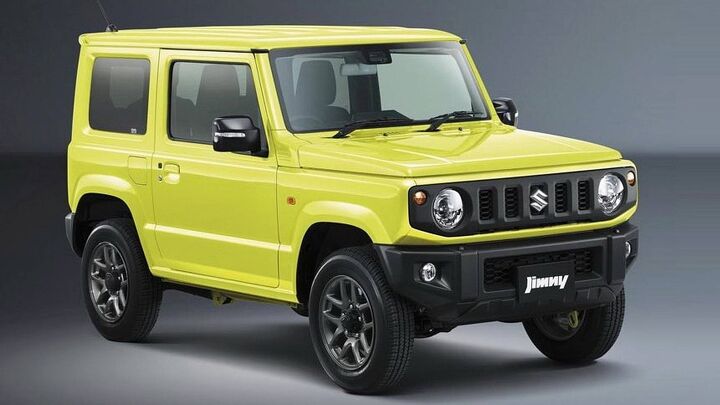
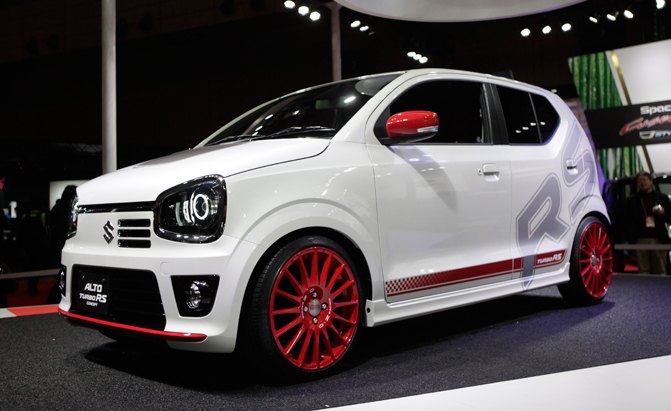
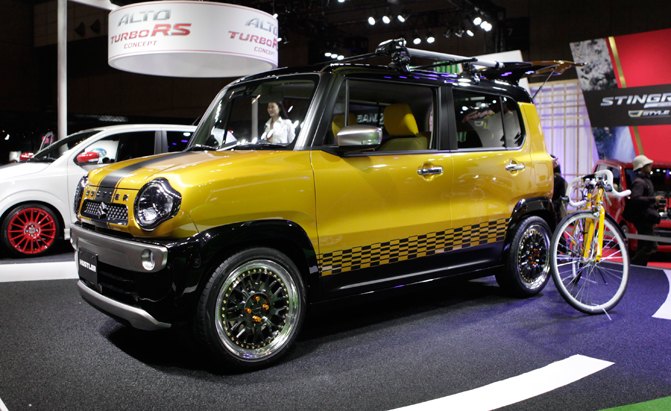
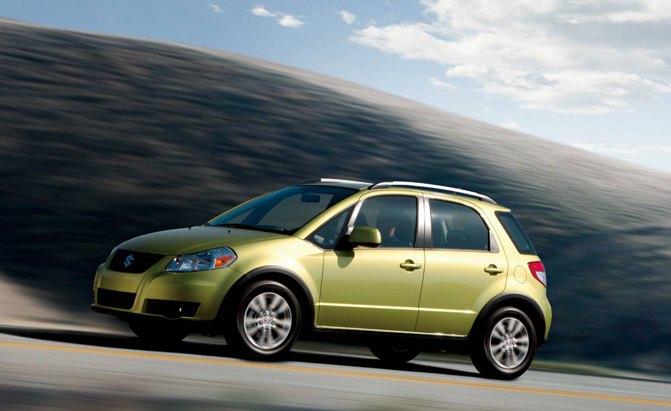
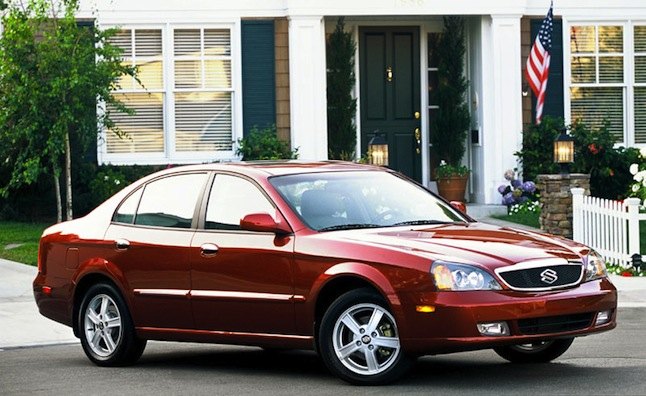
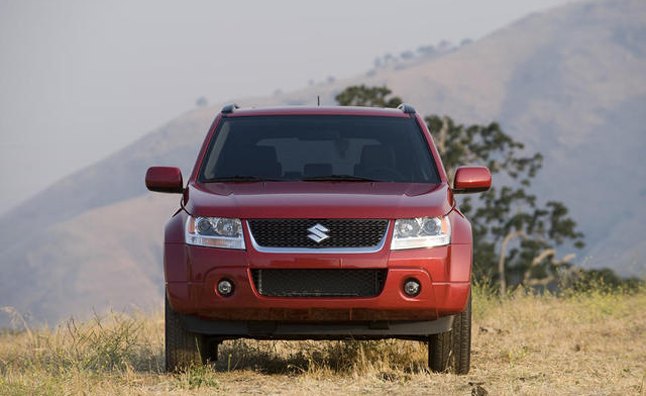
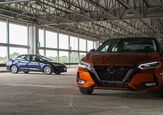
The North American Suzuki Grand Vitara will get some of the updates announced for its Japanese cousin: the Escudo.
Auto News
AutoGuide News Blog
The AutoGuide News Blog is your source for breaking stories from the auto industry. Delivering news immediately, the AutoGuide Blog is constantly updated with the latest information, photos and video from manufacturers, auto shows, the aftermarket and professional racing.
10. Mazda CX-5 $20,995
Crossovers continue to be one of the most competitive new car segments in the industry, and that’s a good thing for car buyers. With more and more entries into the market, prices have dropped across the board. Here’s a quick look at the top 10 cheapest crossover vehicles.
A report out this morning documenting the downward spiral that Suzuki is caught in hints strongly that the Japanese automaker is looking to exit the North American marketplace.
For starters, sales are down. From a total of just over 100,000 in 2007, Suzuki moved just 26,618 units last year and is poised to deliver an equally unimpressive year end result with sales for the first quarter ringing in at 6,561 units. That figure is actually down 2 percent from the year before, in a market that’s up 13 percent.
As a result of low sales, as well as an initiative by Suzuki to shed franchises, the company is down 32 franchises compared to a year before. Worse than that, roughly 150 of Suzuki’s remaining 246 dealerships sell five or less cars per month.
That’s just the start of the ominous news, however. Suzuki skipped the Detroit and LA Auto Shows this year and hasn’t posted a social media message on Twitter or Facebook in months. And after the brand’s top product planning and marketing exec left the company in January, Suzuki announced he wouldn’t be replaced.
The ongoing saga between Volkswagen and Suzuki may last a bit longer. The German automaker is facing arbitration brought by the Japanese automaker to end their partnership, and VW said that the London court handling the proceedings won’t reach a decision before next year.
The break up has been a rough one when back in November of 2011 Volkswagen refused to let go of 19.9-percent of Suzuki’s shares. VW in its annual report published that it “considers the claims to be unfounded and has itself filed counterclaims.” The arbitration process began on November 24th, 2011 at an international court in London by Suzuki. Both companies have been pointing fingers at one another of breaching their cooperation agreement.
Suzuki has no plans on backing down either, as Executive Vice President Yasuhito Harayama said last November that they’re prepared for the arbitration process to take as long as two years to wrap up. Imagine having to wait two years to go through a divorce. Yeesh.
[Source: Bloomberg]

A few years ago, Italian auto giant Fiat was very close to partnering up with General Motors. However, that deal went sour at the last minute and a few years after that, Fiat bought a big chunk of Chrysler in its quest to have a large slice of the American market.
More recently, the company was in the news announcing that Fiat is looking to partner up with Mazda or Suzuki, which would not only help expand Fiat’s reach into the Asian market, but also co-develop future small car platforms and technologies together.
Not content with sitting idling by, waiting for deals to happen, Fiat/Chrysler are constantly seeking alliances to further its growth.
The latest round of news from the 2012 Geneva Auto Show is that Fiat is “open to Volvo talks.” Fiat boss Sergio Marchionne expressed that he is “interested in talking to everyone that wants to talk with me.”
Volvo, which is now owned by the Chinese auto firm Geely, wants to expand itself in the small car segment in developing markets which makes Fiat an good fit because it already has plenty of small cars in its line-up. This tie-up could prove very beneficial for Volvo, to offer a new small car, without going through the expense of designing and engineering a complete new vehicle itself.
Fiat will benefit by finding a route into the Chinese market, which is currently the fastest growing economy in the world.
As for future drive-train technologies, Marchionne says; “There’s still lots of unexplored technology with combustion. Future drive-trains need to be cheaper and more cost effective.”
While Fiat is to introduce its first electric car later this year, the 500e (shown above), it only did so because it pooled technology from a host of companies already in the electric car field and thus saved cost of developing a complete new system themselves.
When asked if Fiat was in talks with PSA Peugeot Citroen, Marchionne denied the claim saying, “I would not like to be GM. The integration for the cost does not go far enough and would not have met our requirements.”
Fiat was at one point in talks with GM to take over Opel-Vauxhall and Saab, and Marchionne confidently said he could have “found a solution for the brands.”
Will Fiat and Volvo become partners or will they form an alliance with Mazda or Suzuki? Only time will tell.
[Source: Autocar]
Chrysler CEO Sergio Marchionne is open to the possibility of a partnership with another automaker to help Chrysler-Fiat’s ailing sales in Europe, with Suzuki and Mazda being cited by the CEO as viable options.
Speaking about the possibility of new partners, Marchionne said, ”We’re not looking, but we are open [to offers],” at a discussion with reporters at the Geneva Motor Show,”We talk to everyone,” he added. The recent GM-Peugeot partnership in Europe leaves Fiat scrambling for viable European partners, and demonstrates that others are joining in on the idea of teaming up to turn a profit in financially unstable Europe. Marchionne is still hopeful that the Peugoet, GM alliance won’t prevent him from making deals with either company in the future, saying ”All [auto makers] could join Fiat to help it in Europe.”
Marchionne went on to say that Suzuki and Mazda seem to be like minded companies to Fiat, and either would make a fine partner to help the brand expand into Asia. Fiat has already struck up deals with Tata Motors in India, and Guangzhou Automobile Group Co. in China, but needs more distribution possibilities to help grow the brand.
Exporting European built vehicles is high on the list for Marchionne as a way to shave off some excess inventory, and a new joint venture with an Asian based company might help Fiat open up some new dealerships who could take these extra cars off the companies hands.
The only company Fiat-Chrysler CEO said would not be compatible as a business partner was Germany’s Volkswagen AG.
[Source: Market Watch]
Titled “Sled”, Suzuki will be showing off their all-wheel drive 2012 Kizashi sport sedan for this year’s Super Bowl commercial. The Kizashi is also the same vehicle Suzuki showed off in their Super Bowl ad last year, which was the company’s first ever.
The ad was developed by Siltanen & Partners Advertising, and hopes to illustrate the “exhilaration one can receive from upgrading their ordinary daily driver with a more entertaining mode of transportation.” Unfortunately not many of us can relate from having to use a dog sled as a method of transportation, but we think you get the point.
The ad won’t be the only thing Suzuki is kicking off on Super Bowl Sunday. The automaker will also be giving away BARKCODE tags to the first 1,000 consumers to register on www.KizashiKicks.com/sled. Each BARKCODE tag is a personalized pet identification tag with a scannable 2D code, allowing pet owners to be reunited if their furry friends become lost or misplaced during a natural disaster. With each tag ordered, BARKCODE will donate $3.00 on behalf of Suzuki to the American Red Cross.
Watch the commercial after the break.
Suzuki is working closely with Fiat to increase their supply of diesel-powered cars in India.
The two have been working together since 2003 when Suzuki started offering a Fiat-sourced 2.0-liter diesel in their Sedici/SX4 duo. That partnership flew in the face of another deal between Suzuki and Volkswagen that has since imploded.
Recently rising gas prices in India, where Maruti-Suzuki has a commanding grasp of the auto market, have meant that demand for diesels is outstripping supply. Consequently, a new deal between Suzuki and Fiat will ramp up production from the previous 280,000 Swifts per year to 380,000.
The Swift is the best-selling car in India, and will likely take an even bigger share in January when the increased production will take effect. The diesel version is so popular that Maruti-Suzuki actually raised the price to encourage consumers to opt for the less popular gasoline powered version.
[Source: Left Lane News]
There’s the Honda N-Box and the Daihatsu Pico, but nothing at this year’s Tokyo Motor Show can compare to the extreme levels of cuteness on display at the Suzuki booth.
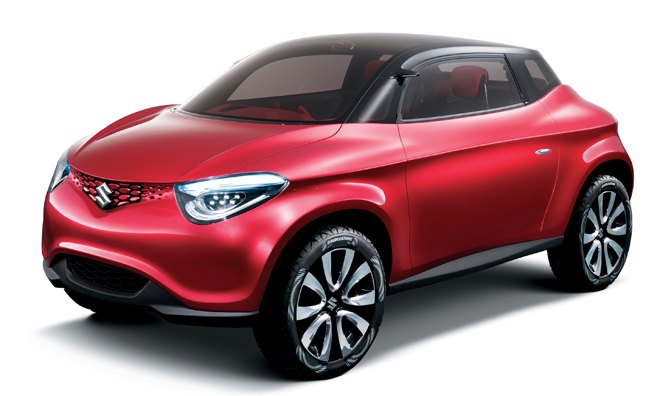
In total, Suzuki has presented three new concept cars, ranging from near-production to downright absurd. In the latter category is the Q Concept (above), which looks more like a Discman (remember those?) than a car and offers an emissions-free electric range of six miles.
Next up is the Regina concept, which looks close to production, with a fresh styling perspective and a conventional gasoline engine. Thanks to significant attention paid to weight reduction, it manages an incredible 72.3-mpg.
Finally there’s the Swift EV Hybrid, which gets its confusing name from a range-extender powerplant similar to that found in the Chevy Volt. Offering between 12 and 18 miles of electric travel, the gasoline engine then kicks in to recharge the batteries to deliver added range.
GALLERY: Suzuki Q Concept
GALLERY: Suzuki Regina Concept
GALLERY: Suzuki Swift EV Hybrid Concept
The honeymoon period didn’t last long for Suzuki and Volkswagen and now the Japanese automaker has filed for divorce. In an official statement Suzuki Motor Corp. has announced it will seek arbitration in an attempt to get back the shares the German auto giant currently holds in the Japanese small car manufacturer.
“The arbitration proceedings follow Suzuki’s termination of its alliance with Volkswagen AG on 18 November 2011, and Volkswagen AG‘s lack of response to Suzuki’s requests for the disposition of its shares,” said Suzuki in a release.
The two automakers signed a partnership agreement in 2009, with Suzuki taking a 1.49 percent stake in Volkswagen, and VW taking a 19.9 percent stake in Suzuki. No joint projects ever came of the venture and Volkswagen accuses Suzuki of breaking the spirit of the agreement by purchasing diesel engines from VW rival Fiat.
Suzuki is seeking to have VW sell back the shares it holds, or to sell them to a third party.
[Source: AutoNews]
The soap opera between Suzuki and Volkswagen has been ongoing for almost a year and now the Japanese automaker is looking to back out. Suzuki wants to buy back all the 19.9% of its shares that VW currently owns and that if the German automaker does not comply, Suzuki will seek mediation.
According to a statement by Suzuki Motor Corporations Chairman Osamu Suzuki, they have terminated the partnership as of today.
This whole rift starter when VW accused Suzuki for violating their agreement when Suzuki made a deal with Fiat S.p.A. over engines.
VW then went on to anger Suzuki by listing it as an “associate” and not a partner in its annual report, and lists Suzuki under “other holdings.”
Suzuki felt this was an insult to its honor and has thus been wanting to end their partnership ever since.
VW has not commented if it will indeed sell its shares back to Suzuki, so this story is far from over yet and from a legal stand-point can get much uglier still.
[Source: Automotive News]
While Suzuki cars might not be very popular in North America, in its home market of Japan, they are a very big deal indeed. So to serve their home market, Suzuki is bringing a trio of concept cars for the upcoming Tokyo Motor Show. These are the Regina, Q Concept and the Swift EV Hybrid.
The Regina is a lightweight city car that can seat four, and despite just having a gasoline engine, should manage 72.3-mpg. Apart from the low weight, its low drag co-efficient also helps it achieve its impressive fuel economy figures. Suzuki didn’t mention the exact Cd figure but says its 10% lower than similar sized city cars.
GALLERY: Suzuki Regina Concept
Participating in an auto show is an expensive business. To rent the right amount of space for your display, then have a stage constructed to represent the brands image, plus hiring all the staff needed at the booth to answer questions from the public. It’s all a very big and expensive affair which can easily cost up to $1-million per show.
All this is fine when the company is making tons of money, but when a company is in the red, spending lavishly at an auto show is not the smartest thing to do.
Take Suzuki for example. Back in 2007, it was selling 100,000 vehicles in the States per year. Last year, that number was down to less than a quarter of that at 23,994 units.
While Suzuki sales are up slightly this year, but not by much, and it looks as if the brand will not have a great year ahead of them either. To save money, Suzuki has decided to skip the upcoming L.A. Auto Show, and will also skip the North American International Auto Show in January.
Suzuki’s spokesman Jeff Holland said; “For the upcoming season, our brand will selectively participate at auto shows where our distinctive and engaging story will resonate the most.
Apparently Suzuki’s story does not resonate with the California crowd, as only 430 new Suzuki’s were sold in the sunny state.
Part of the reason Suzuki has been struggling is because of the strength of the Japanese Yen compared to the Dollar. Apart from the Equator pick-up truck, all the Suzuki models are built in Japan, and the unfavorable exchange rate is hurting them very directly.
In its home market, Suzuki is still a very brand and the most popular new car sold in Japan is the Suzuki Wagon R, plus their motorbike division is among the most successful in the industry on a global scale.
[Source: Automotive News]
10. Toyota Yaris 3-Door: $14,115
You can sound polite and say “inexpensive” but if you’re strapped for cash, the most important question when shopping for a new car is: what’s the cheapest car on the market? AutoGuide has got the answer, along with the nine runners up.
Toyota‘s warmed-over Yaris makes the 10th spot on our list with a base price of $14,115 for the 3-door model. The pricier 5-door will run you $15,150.
Using a 1.5-liter 4-cylinder like many of its counterparts the Yaris makes 106-hp and is rated at 38-mpg on the highway making it one of the most efficient models in its class, but not the most efficient. Growing three inches overall, Toyota claims the new car has 68 percent more cargo room than the outgoing model, which it shares a near-identical resemblance with. Standard on all models is air conditioning, nine airbags and power windows.
A public disagreement between Volkswagen and Suzuki in early September left the Japanese automaker wanting to end its partnership, but that might not happen. In a news release Monday, the company said it “will retain its stake in Suzuki Motor Corp. unchanged.”
Suzuki requested its shares be returned in light of what representatives say are numerous violations in the 2009 agreement to develop green cars. Two years ago the companies partnered, agreeing to share VW technology with Suzuki in exchange for insight into emerging markets like India. The agreement disintegrated since then, with both companies citing violations by the other.
Suzuki claims Volkswagen violated the agreement in developing hybrids and electric cars several times thus far. On the other end of the argument, Suzuki also bought diesel engines from VW rival Fiat, something Volkswagen said was contradictory to their agreement.
Volkswagen made an announcement about the issue early last month, leading to a public dispute between then two companies. The fight left Suzuki insisting the companies part ways.
Suzuki owns just under a 1.5 percent stake in Volkswagen.
[Source: The Detroit News]
Suzuki may be an also ran in America, but in India, their Maruti Suzuki partnership can boast the title of “best-selling car” with their Alto subcompact. With a population of 1 billion people, the Indian market is a significant one, and the Japanese auto maker is facing competition not just from home grown efforts like Tata, but Hyundai as well.
The Alto is a pretty antiquated platform, and Hyundai is hoping that their new effort, dubbed the Eon, will not only be more technologically advanced, but price competitive, at around $6,000. Powering the Eon will be a 1.2L 4-cylinder engine making 80 horsepower.
After a two year alliance between Volkswagen and Suzuki, relations and communication quickly deteriorated earlier this September after Suzuki had gone to Fiat to supply their engines. Volkswagen, upset at the deal, very publically claimed it was a serious breach of Suzuki’s contract.
Now, Suzuki Chairman and CEO, Mr. Osamu Suzuki, is demanding Volkswagen to withdraw the claim, as it stains Suzuki’s global reputation and public image. Osamu also insists that the deal with Fiat does not violate any contractual agreements with Volkswagen.
According to Suzuki, the matter of buying Fiat engines had been discussed with Volkswagen back in January and both sides accepted the terms. The reason behind the deal is Suzuki’s need of an engine that would meet specified parameters for their Sx4 compact. Fiat had such a 1.6 liter diesel engine available while Volkswagen did not.
The unraveling relations have accelerated as a very upset Osamu Suzuki says, “Volkswagen’s notice and press release hinder our effort to develop attractive new products and significantly disparage Suzuki’s honor. I think you can share my view why Suzuki would like to dissolve partnership and cross-shareholding relationship with Volkswagen.”
Volkswagen currently owns a 19.89 percent share of Suzuki while Suzuki holds 1.49 percent of VW. Initially expecting benefits from the alliance, Osamu is frustrated by two years of, “Ball and chain for our managerial independence.” Osamu intends for Suzuki to abandon its 1.49 percent holdings of VW and demands that VW sell all 19.89 percent of its stake in Suzuki as well.
While it is clear that Suzuki is stubbornly convinced their relationship with Volkswagen has come to an end, VW has no intention of selling their stake in Suzuki. Earlier this week, Volkswagen also announced their ambitions to grow into a larger automaker.
[Source: Automotive News]
Volkswagen will halt its practice of acquiring auto makers as a means of boosting its total sales volume, according a report by Bloomberg.
With Volkswagen in place to become the world’s second largest automaker, the company’s massive stable of brands, which includes Volkswagen, Audi, SEAT, Skoda, Lamborghini, Audi and Bugatti, will remain static, with VW hoping to simply sell more cars.
Volkswagen has recently seen its alliance with Suzuki go down in flames, and has struggled to take control of long time technological partner Porsche.
[Source: Automotive News ]
It’s official, the proposed alliance between Suzuki Motor Co. and Volkswagen AG is now dead in the water. On Sunday; VW said that the Japanese company’s decision to source diesel engines from Fiat, was an infringement on the terms of the deal between it and VW.
As a result today, in Tokyo, during an unscheduled board meeting, Suzuki has decided to terminate its alliance with VW, citing that the deal is having an increasingly negative impact on the Japanese company; especially relating to independent management decision making at the highest level.
Currently; Volkswagen has 19.9 percent interest in Suzuki, while the the latter has just a 1.49 percent stake in the German giant. With the alliance deal now off the cards, Suzuki is hoping that VW will sell its shares in the company, though an official line from Wolfsburg is that VW has no intention of selling shares, nor reducing its stake in the Japanese automaker.
The Suzuki/VW partnership has been troubled from day one; the original plan was for both automakers to cooperate in the areas of technology, including hybrid vehicles as well as develop expansion plans into emerging markets. However, two years later, no such projects have come to fruition.
In addition, Suzuki has felt that increasingly, its role in the partnership was becoming overshadowed by VW; while the latter believes that the Japanese concern has been less than transparent in some of its dealings, especially relating to Fiat which is reportedly looking to form its own alliances with rival automakers.
Nonetheless VW believes that an alliance is still possible, though remains very much “under review.”
The real prize for VW is Suzuki’s dominance in India where its Maruti-Suzuki operation is the market leader; estimates predict that by the end of this year M-S will sell some 36 percent of 3.07 million vehicles delivered in that country. In addition, Indian vehicle sales are expected to increase over the next five years to around 5.47 million units per annum, so any chance to get in on the action presents a potentially huge opportunity for rival carmakers, even if it is through alliances or joint ventures.
Yet while VW remains at least lukewarm to the idea of an alliance between the two companies, Suzuki Chairman; Osamu Suzuki, in a Nikkei newspaper article; wrote that, “he hasn’t found any VW technologies he’d like to adopt following an extensive review of what they have to offer.”
[Source: Automotive News]
As a brand Suzuki has had limited success in North America, selling rebadged GM crossovers when it probably should have been pushing the types of cars it knows best – small cars. While the Swift used to be offered here, its days passed long ago (apart from the rebadged old Daewoo offered in Canada).
The Swift soldiered on in other markets, however, and has evolved into a solid machine. And now Suzuki is adding more style and performance by introducing a new Swift Sport model for 2012 at the 64th International Motor Show in Frankfurt. This new model, which is just an update to the current Swift model sold in Europe and Asia, gets a larger grille in the front, and ground effects and spoilers which according to Suzuki “suppress lift and give the car a lower visual center of gravity.” You also get new 17-inch alloy wheels wearing 195/45R17 tires. HID headlamps and new tail lights complete the fresh new look.
Sporty seats and a five-dial instrument cluster add to this cars sporty character on the inside. However, the changes under the hood are what enthusiasts will be lusting after. The Swift Sport gets Suzuki’s new M16A motor, which produces 8% more power while also improving fuel consumption by 11%. This 1.6-liter, four-cylinder unit produces 134 hp and 118 lb-ft of torque.
Power goes to only the front wheels via a new six-speed manual gearbox which features a triple-cone synchromesh for a more sportier feel.
To keep you safe, electronic stability control is standard along with 7-airbags.
So if you’re moving to Europe and are looking for a fun new hatchback to drive around in, the new Swift Sport will be on sale very shortly. Just don’t look for it at your local dealer… pity.
Look for more details tomorrow at AutoGuide’s official Frankfurt Auto Show page here.
GALLERY: Suzuki Swift Sport
With the Volkswagen/Suzuki tie-up all but officially over, the latest move by Volkswagen is sure to end it. After its first full review of the “partnership” Volkswagen has announced it is, “serving notice of an infringement by Suzuki of the cooperation agreement.”
The reason for the notice is a result of Suzuki’s decision to purchase diesel engines from VW rival Fiat, which, claims the German automaker, “contradicts the terms of the cooperation agreement.”
Volkswagen has said it has offered to discuss the matter with Suzuki but said the filing was necessary, giving Suzuki a period of several weeks to “remedy the infringement.”
Back in December of 2009 the two automakers announced the tie-up, which was supposed to see Suzuki gain technology from VW, in return for insight and cooperation by Suzuki into emerging markets like India. VW also purchased a 19.9 percent stake in the Japanese automaker.
Perhaps adding insult to injury, in a release by Volkswagen, the German automaker says the “partnership” is not over yet, referring to Suzuki as, “an attractive investment.” That’s not likely to sit well with Suzuki execs. (Didn’t we say you should expect divorce papers soon?)
Young love can turn into a bitter divorce faster than you can say “Rocktan.” That at least appears to be the case with the relatively recent partnership between Germany’s world-domination seeking Volkswagen and the minicar experts from Japan, Suzuki.
Like many a relationship gone sour, the problem appears to be communication.
“Volkswagen is not talking to us,” said chairman Osamu Suzuki. “”We have no plans to talk to them.”
Suzuki also accuses VW of speaking directly to the media, rather than with executives at the Japanese automaker. The divide between the two reportedly began when Volkswagen announced it could, “significantly influence financial and operating policy decisions” at the Japanese automaker.
Suzuki’s response has been swift, announcing that, in retrospect, it’s not interested in any of VW’s technologies, following through on that statement by opting to purchase diesel engines from rival Fiat.
The tie-up was first announced in 2009, with VW spending $2.9 billion for a 20 percent stake in Suzuki. The plan was cooperate on electric and hybrid technology while VW hoped to tap into Suzuki’s success in emerging markets like India, where last year the Japanese automaker sold 1.13 million vehicles compared to VW’s 53,000.
Officially the two automakers are continuing to live in the same house, but somebody’s sleeping on the couch. And as they’re certainly not sticking together for the kids (in two year’s not a single joint project has been developed), look for someone to file divorce papers soon.
[Source: Bloomberg]
In 2010, Volkswagen took a twenty-percent stake in Suzuki, and virtually no progress has been made from the alliance since then. Neither side has been thrilled with the coalition and the two automakers have even stated cultural differences as being a factor in the failed relationship.
Both automakers had different goals: VW wanted to expand into the Asian small-car market, while Suzuki wanted to take advantage of VW’s expertise in diesel, hybrid, and electric cars. As a result, Suzuki may be looking to take its talents to Italy.
Currently, Suzuki has made a deal with Fiat to supply the SX4 crossover for rebadging as the Sedici in Europe. Sources have indicated that Suzuki is looking for ways to further its relationship with Fiat, however the Italian automaker has not indicated whether the feeling is mutual.
As it stands, the Japanese and German automaker have clearly expected more out of this partnership, yet neither are progressing. Suzuki and VW are likely to split but the Japanese automaker has more to lose, so expect to see a move sooner rather than later.
[Source: Truck Trend]
Each market has its favorites when it comes to cars. People in the Middle-East prefer powerful SUV’s like the Mercedes-Benz G-class, while in America the pick-up truck reigns supreme, especially the Ford F-150.
In Japan, the most popular car is neither big, nor powerful, but it fills the needs of most of its motorists. Since 2003, the most popular car sold in Japan is the Suzuki Wagon R.
The Wagon R is a kei-class vehicle, which means it fits in Japan’s stringent “Kei” segment. Cars in this segment, the smallest road-legal cars available. Kei cars cannot have engines larger than 660 cc, can be no longer than 11.2 feet, should have a maximum width of 4.2 feet and cannot be taller than 6.6 feet.
Despite such restrictions, all major Japanese manufacturers offer cars in this segment. And just because they are small, don’t think they have skimmed on equipment either as all-wheel drive, turbocharged engines and all sorts of electronic gizmos are available.
Between the generous equipment levels, tax breaks and fuel savings these cars provide kei-cars have become wildly popular in Japan. According to “The Japan Mini Vehicle Association” more than 50% of the cars on Japanese roads are now kei-cars. Not only are these cars popular in city centers, but the survey reveals that even in rural areas people prefer smaller vehicles.
The least popular city for such cars is the metropolitan city of Tokyo, where only 11% of household owns kei-cars, while in Tottori Perfecture, 98% of households own kei-cars.
Since fuel prices and congestion in big cities is ever increasing in North America, would this trend catch on here? We highly doubt it.
[Source: Green Car Reports]