Auto News

AutoGuide News Blog


The AutoGuide News Blog is your source for breaking stories from the auto industry. Delivering news immediately, the AutoGuide Blog is constantly updated with the latest information, photos and video from manufacturers, auto shows, the aftermarket and professional racing.
 |  Mar 30, 2:47 PM

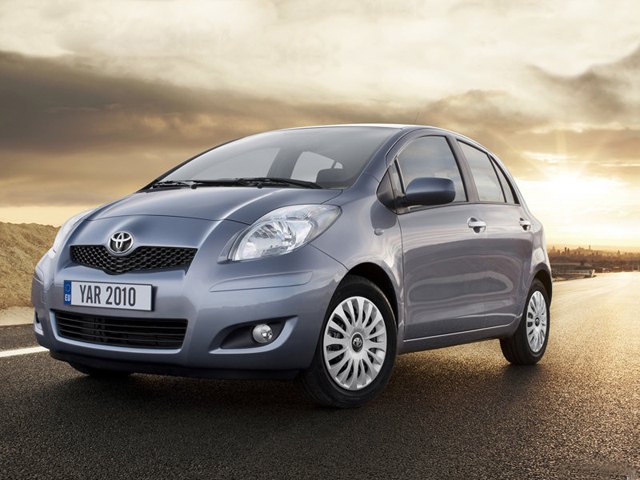
The Toyota plant which builds the Yaris subcompact for export markets will remain closed for another month, as the factory recovers from the massive earthquake which struck northern Japan.

While the plant has had repairs completed and electricity has returned, the supply of natural gas has not been restored. Toyota’s other plants are expected to remain closed until at least April 14th, but the Yaris plant in Miyagi prefecture will stay shuttered until the end of April. Toyota has resumed production of its Prius hybrid, but is only operating at 50 percent capacity.

Toyota released a statement claiming “Depending on vehicle type, there may be a significant impact on our production capabilities.” No start date was given for any of their factories, but a source told Automotive News that the company was attempting to secure a gas supply from neighboring regions. Parts supplies also remain an issue, and the company is attempting to resolve these problems from their Toyota City headquarters.

[Source: Automotive News]

 |  Mar 25, 3:35 PM

2012_MAZDA5_038

Mazda is planning to close down their assembly plants again, while stopping orders from dealers in the United States for their made-in-Japan vehicles.

The Mazda2, Mazda3, Mazda5, MX-5, RX-8, CX-7, CX-9 are all affected. Only the Mazda6 and Tribute will remain in production at their American plants, although the situation could change in light of the parts suppliers affected by the earthquake. As of March 1st, the company had a 94-day supply of vehicles, but the automaker declined to comment on specifics.

In 2010, imported cars accounted for 83 percent of Mazda sales, a much higher number than other Japanese automakers, who build a significant proportion of their cars in North American plants. Mazda’s factories in Japan are located in Hiroshima and Hofu, at the opposite end of the country from where an earthquake, tsunami and nuclear incident are taking place.

[Source: Automotive News]

 |  Mar 24, 11:35 AM

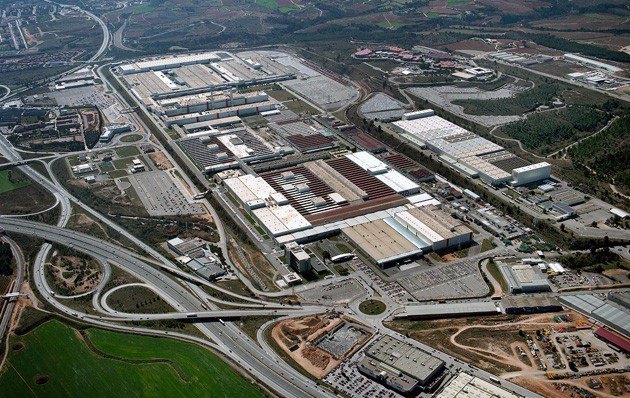
Volkswagen‘s Spanish subsidiary SEAT is preparing to take on the task of assembling Audi‘s Q3 compact crossover, at their plant outside of Barcelona.

The move comes as a bit of a quid pro quo for Audi, since SEAT’s Exeo flagship is a re-badged Audi A4, and with SEAT’s flagging sales presenting an issue for Volkswagen’s overall profitability, the excess production capacity could be put to good use building a product that will surely be a hit. The move will also add between 700 and 1,200 jobs in a region that has been hit hard by the global recession.

The Q3 will share a platform with the upcoming Porsche Cajun, but the P-Car will be built at a separate facility in Leipzig, Germany.

[Source: SEAT]

Continue Reading…

 |  Mar 22, 2:27 PM

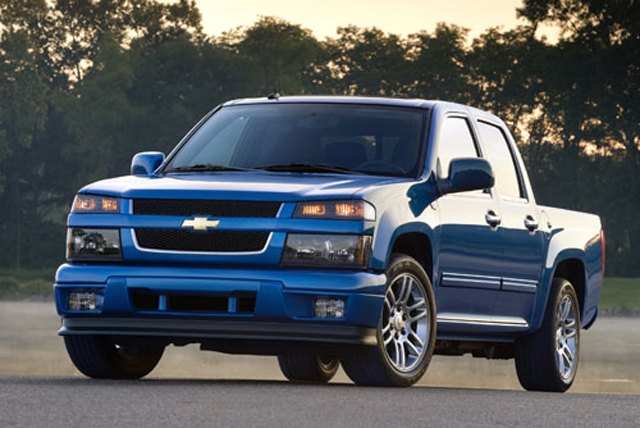
General Motors has halted production at their Tonawanda, New York engine plant, due to a parts shortage that has affected another factory in Louisiana.

The New York plant builds engines for the Chevrolet Colorado and GMC Canyon, which are assembled at the Shreveport, Louisiana plant. While GM has acknowledged that the closure is due to an issue with Japanese parts, GM hasn’t specified what components are affected.

Of the 623 workers at the plant, 59 have been laid off due to the shortage. Some have suspected that GM is diverting the components to more profitable vehicles, as it fears an extreme disruption to its supply chain. GM plants in Spain and Germany have also been closed due to the shortage.

[Source: USA Today]

 |  Mar 18, 1:10 PM

2011_MAZDA2_103

Mazda will resume production of vehicles on March 22nd, an encouraging sign for the Japanese auto industry as it battles a catastrophic series of events that has seen most automakers in the country suspend production.

With Mazda based in Hiroshima, hundreds of miles away from the earthquake, tsunami and on-going nuclear incidents, the company has fared better than other car companies, Mazda said it will resume production on March 22nd, with a focus on spare parts and vehicles using “in process” inventories. Mazda said that it will announced medium and long-term production in the near future, but is unable to decide at this point in time.

[Source: Left Lane News]

 |  Mar 17, 2:59 PM

P0037613

BMW is considering an assembly plant in Latin America, specifically Brazil, but its exact plans remain up in the air. BMW currently builds motorcycles at a plant in Manaus, and is debating whether to expand its facility to include auto production, or starting an all new plant exclusively for cars.

BMW would likely begin with assembling knock-down kits of their cars and expand the plant as necessary. While a full-blown facility with a stamping plant, paint shop and assembly line would normally require high volumes, BMW officials noted that their South African operation is successful even when producing 50,000 cars per year, about half of what is normally required for a large plant to be profitable. The company also maintains assembly sites for knock-down kits in countries like Egypt, India, Russia and Malaysia.

[Source: Reuters]

 |  Mar 14, 11:34 AM

2009-mazda-mx-5-miata-convertible-03

With the recent earthquakes and tsunamis devestating Japan, automakers in the country are announcing a series of plant closures. Toyota, Mazda, Honda and Nissan have all announced plans to close various factories through the middle of March, although the plants could remain shuttered beyond that timeframe.

Toyota led the pack by announcing that their plants would close due to supply chain issues related to the disasters. Production of all Scion models will be halted, while the Toyota 4Runner, FJ Cruiser, Land Cruiser, Prius and Yaris will see production capacities affected. Similarly, the Lexus GS, LS, IS, GX and LX models will face some kind of production decrease. While many of the company’s most successful models are produced in North America, production at Toyota facilities in Texas, Kentucky and Canada would be hit as parts supplies from Japan may be compromised.

Mazda has also suspened production at two plants in Hiroshima and Hofu, which build their entire range of vehicles. Honda announced that their plants, which export the Civic Hybrid, Insight and versions of the Accord, would see a halt until March 20th, while Nissan announced a stop production order at Japanese plants until March 18th.

It would appear that Mazda, which relies almost entirely on exports, will be hardest hit by the disaster, and we can only hope that both Japan and its car industry recovers quickly from this horrific tragedy.

[Source: Left Lane News]

 |  Feb 21, 9:16 AM

Nissan‘s Leaf electric car has been in such high demand that the company is struggling to build them fast enough. It’s stopped taking new orders just to fulfill its current demand.

Out of 27,000 total orders so far from the United States, Japan, and Europe, it has only completed 10,000. The remaining 17,000 will be pushed back to the next fiscal year in April—enough time for the Oppama, Japan plant to reach its maximum capacity. It will be able to build 50,000 Leafs by then, and would be able to take 33,000 more orders from those clamoring to ride the lightning.

Nissan wants to get their international factories going to fulfill demand, which could see the electric car built in England as well as Tennessee. One possibility could be to open new assembly lines earlier than scheduled, but Nissan is also planning a new factory that can churn out lithium-ion battery packs, which won’t be ready if they do so.

[Source: Automotive News via Carscoop]

 |  Feb 15, 3:33 PM

2010-toyota-prius-39

A fire at a Toyota assembly plant in Japan temporarily halted production at a facility that assembles the Prius, Camry and Scion tC. The fire broke out around 10 A.M. but was put out by now.

Toyota reports that no production equipment was damaged, but the fire did affect the factory’s ceiling. An investigation is being launched to determine the cause of the fire.

[Source: LeftLane News]

 |  Feb 07, 12:25 PM

Mere months after workers at Chrysler’s Jefferson North factory were caught drinking and smoking marijuana on their lunch breaks, three employees were arrested by law enforcement agencies after Chrysler tipped off police regarding workers who continued to abuse substances while on the job.

The workers were arrested on January 24th, but have yet to be formally charged, according to a spokesman for the Michigan State Police. Chrysler confirmed that they were co-operating with police on the matter. The company released a statement to the media, remarking “In this instance, Chrysler Group cooperated with the County of Macomb Enforcement Team in the arrest of suspected employees at Jefferson North who were allegedly in violation of state law.”

A local Fox affiliate caught workers on video engaging in similar behavior last fall. The Jefferson North plant builds the Jeep Grand Cherokee and Dodge Durango, two vehicles that have won widespread acclaim from consumers and the media.

[Source: The Detroit News]

 |  Oct 21, 11:14 AM

General Motors auctioned off assets from the “old GM” that existed before the company’s bankruptcy filings in 2009. The sale, which lasted for more than 10 hours and was broadcast online, was largely composed of heavy machinery and plant equipment.

The assets come from GM’s Livonia plant, which built the Northstar V8 engine for high-end GM vehicles like Cadillac. The machinery was sent to countries including Turkey, Mexico and India. More interestingly, GM is also planning to offload property that includes an Indiana church, a golf course in New Jersey and thousands of robots used to assemble cars.

[Source: The Detroit News]

 |  Jul 23, 1:29 PM

A New York Times article reporting on Fiat’s push to “impose American-style standards” at an Alfa Romeo plant in Southern Italy, where workers workers will have to *gasp* work more hours and cut back on absences. One irate employee told the Times that“… too much work is going to kill our workers”, prompting nods of agreement from UAW management types across North America.

Among the hilariously stereotypical but odious offences listed involve “…peers who call in sick to earn money while working another job or skip work with a fake doctor’s note — especially when the local soccer team is playing.” The old jokes about Alfa factory workers building a car on Friday and finishing to the next week seem all too true, and Alfa still has a bad reputation for poor build quality to this day.

The Times article goes on to discuss the ongoing European economic crisis, and how the Alfa plant, situated in the South of the country, is emblematic of the significantly lower living standards in the region relative to the North of the country, and many other European nations.

Fiat CEO Sergio Marchonne wants to toughen up standards by cracking down on absenteeism and a culture where ” people don’t miss a chance to miss work.” One worker told an anecdote of how Fiat erected massive television screens inside the factory so that workers could watch the World Cup during work. Many employees still failed to show up, skipping work to watch the game elsewhere, despite being paid by Fiat to watch the matches. The same employee described the crushing effect that absent workers have, stating that “When one person is missing, it slows down the whole group and everyone has to pick up the slack. The production of 200 cars, for example, is slowed to 160 if a person is gone. Imagine when this is multiplied across the factory.”

Despite this, 63 percent of the work force agreed to accept the tough new standards, in return for an investment of almost $1 billion and the addition of a third shift at the plant. Measures like this are inevitable if Europe wants to pull itself back from the brink, and shrug off the crushing austerity programs, which force higher taxes and massive reductions in social welfare spending as a means of gaining some economic stability.

[Source: New York Times Photo Credit: Roberto Salmone for the International Herald Tribune]