Auto News
AutoGuide News Blog
The AutoGuide News Blog is your source for breaking stories from the auto industry. Delivering news immediately, the AutoGuide Blog is constantly updated with the latest information, photos and video from manufacturers, auto shows, the aftermarket and professional racing.

16/06/2011 | By: Huw Evans

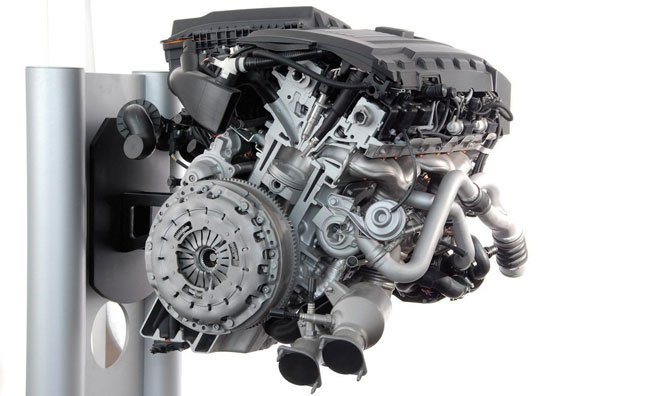
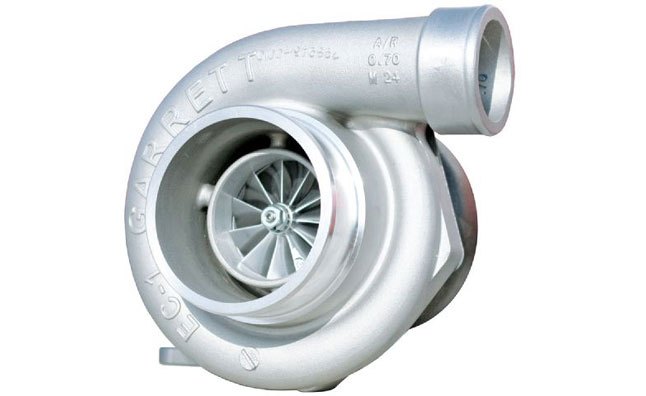
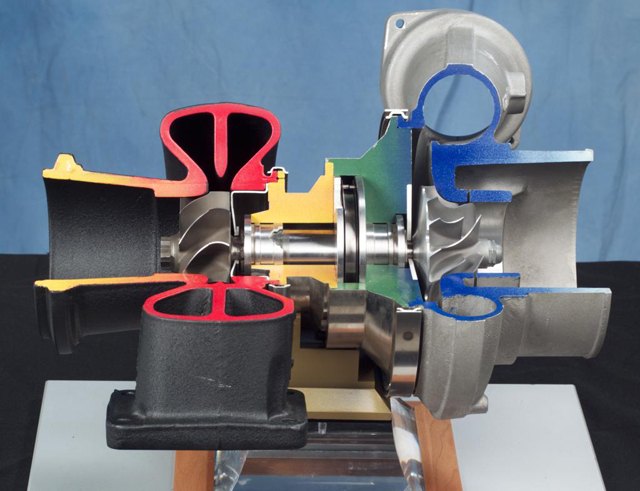
Traditionally, the most effective way of combining performance and fuel economy is via turbocharging; the idea being that using exhaust gas to produce boost and hence greater air volumes, results in the driver having performance on demand.

Turbos first gained a foothold in the North American market back in the late 1970s as some automakers, notably Buick and Ford, sought to balance performance with ever tightening fuel economy standards.

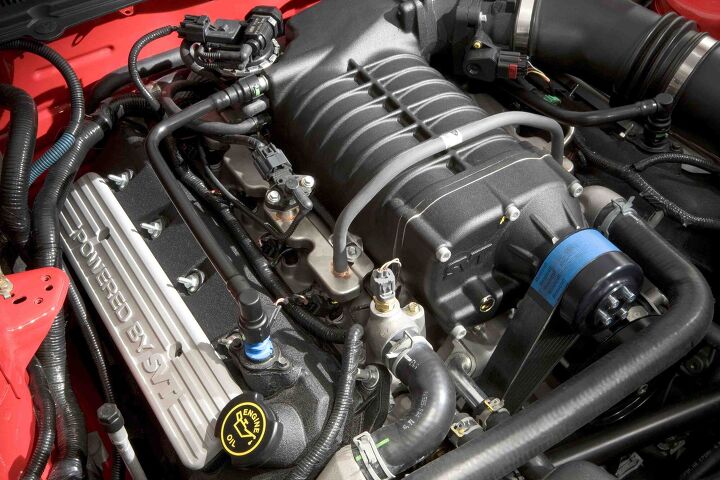
Now, more than a generation later, the same thing is happening again. This hasn’t been good news for supercharger manufacturers. Compared to turbos, engine driven superchargers are often seen as the realm of high horsepower, gas guzzling V8 muscle cars and street trucks, requiring considerable effort to keep them spinning, which increases parasitic loss and lowers fuel economy.

However Eaton Corp, one of the largest manufacturers of OE superchargers, is hoping to reverse the trend toward turbos, by introducing a new line of superchargers, dubbed the Twin Vortices  Series, aimed at small displacement applications (engines as small as 1.2-liters in fact).

Eaton is also going to great lengths in highlighting some of the benefits of superchargers, notably greater reliability, reduced maintenance and much better torque production at low and mid-range rpm, where street engines spend most of their time.

Some of the more ‘thrifty’ vehicles which already sport Eaton blowers include the pint-size Nissan Micra and Chery A3, while at the other end of the spectrum, Porsche uses an Eaton supercharger for it’s Cayenne Hybrid SUV.

Will Eaton be able to shift public perception when it comes to superchargers, as well as curtail the dominance of OE turbo makers such as Honeywell and Mitsubishi? Only time will tell.

[Source: The Car Tech Blog]

16/03/2011 | By: Derek Kreindler

While forced induction has long been in favor in the rest of the world, Americans have often favored big displacement motors, but recent trends towards fuel economy have necessitated a shift to smaller motors, and turbocharging is considered the optimal way to stretch 4-cylinders into feeling like 6.

Honeywell, one of the largest manufacturers of turbochargers, is forecasting use of turbochargers to double in time for strict new fuel economy regulations that are set to take effect in 2015. Honeywell expects 20 percent of engines to use turbochargers by then, up from 9 percent in 2010. However that number lags behind Europe’s 67 percent figure and 28 percent in India.

While turbochargers previously carried negative connotations in the United States, the need for more power and efficiency has led them out of a small performance niche and into the mainstream. Ford expects 90 percent of its lineup to offer a turbocharged Ecoboost motor by 2013, and Chevrolet’s Cruze Eco, one of its heavily promoted “green” cars, uses a small turbocharged engine to deliver 40 mpg.

[Source: Bloomberg]

24/09/2010 | By: Derek Kreindler

Turbocharging is moving away from the performance sphere and into the mainstream as companies seek to get more power and fuel economy from smaller displacement engines.

Honeywell, a leading automotive equipment supplier and turbocharger company, estimates that by 2015, 35 million new vehicles with turbochargers will be sold annually, up from 17 million right now. While Honeywell has an obvious interest in promoting the use of this technology, their numbers are backed by independent research firms like J.D. Power, and the company is hedging its bets on the internal combustion engine.

“Despite the buzz around hybrid and electric vehicles, it is clear that automakers will be looking primarily at turbocharged engines to help ‘green’ their fleets and meet the regulatory targets like CAFE in the U.S.,” Alex Ismail, president and CEO of Honeywell Transportation System, told Wired magazine.

While alternative fuel vehicles have their merits, you’ll never find us complaining about more turbocharged gasoline engines.

[Source: Wired Magazine]

Report: 2011 Ford Super Duty to Get New 6.7-Liter Power Stroke V8

New engine has reversed cylinder heads and a sequential variable turbine geometry turbo

31/08/2009 | By: Colum Wood

power-stroke-6.7l-dies-1280.jpg

Ford is set to release a revolutionary new 6.7-liter Power Stroke turbo-diesel engine for its line of Super Duty F-Series trucks in 2011. The all-new engine promises a, “significant improvement in torque, horsepower and fuel economy,” says Ford in a press release, stating that this new F-Series Super Duty would continue to be a class leader in both payload and towing.


Numerous high-tech innovations have been employed in building this new engine, starting with a compacted graphite iron (CGI) engine block that Ford says is twice as strong as standard iron blocks. This was deemed necessary due to the increases in power output.

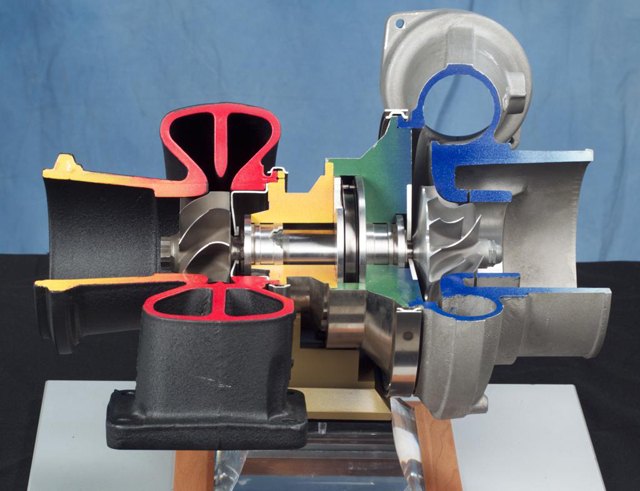
The new engine makes use of a Honeywell single variable turbine turbo (similar to the one found on the Porsche 911 Turbo), but takes turbo technology a step further still. Instead of one, there are two compressor wheels driven off a single turbine impeller, working like a bi-turbo setup that gives the engine a fast response time with little lag as well as the power of a larger turbo.

Visually, the new engine looks remarkably different, due to the fact that the intake and exhaust systems are the reverse of a conventional engine. The exhaust manifolds sit in the valley of the big V8 engine, while the intake manifold is on the outside. This means the cylinder heads are essentially flipped around.

By significantly reducing the amount of exhaust piping, lag is reduced considerably. Additionally, this new packaging moves the hotter elements of the engine (like the turbocharger and exhaust pipes) away from the intake areas, ensuring a constant supply of cool air to the engine. And as for that turbo, it sits in the valley between the cylinder banks. Due to its location, spool up is considerably faster and the engine’s overall balance is improved. Another major benefit of this setup is that that cab no longer has to be removed from the frame if work needs to be done on the turbo. The fuel-pump, EGR (exhaust gas recirculation) components and the thermostats are also easily accessible from the front of the vehicle.

Ford hasn’t released any specifics on the new engine but if out scientific and sophisticated brains have understood all this talk of a sequential variable turbine geometry turbo correctly, our power-loving neanderthal brains are in for a real treat when this new package makes it to market.

GALLERY: 2011 Ford Super Duty Power Stroke 6.7-Liter V8

single-shaft-turbo---c-1280.jpgsingle-shaft-turbo---w-1280.jpgpower-stroke-inboard-exhaust.gifpower-stroke-turbo-mount.gif

Official release after the jump:

Continue Reading…