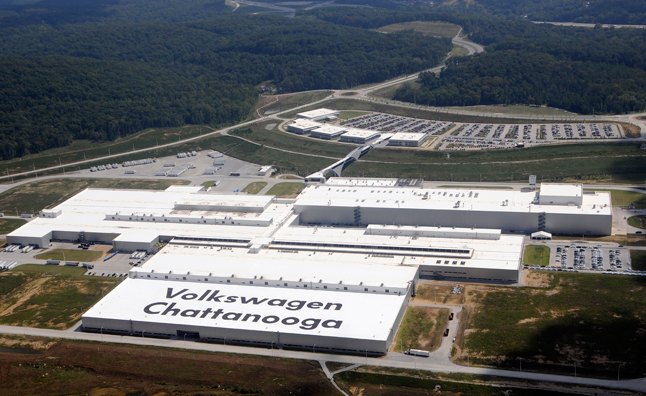
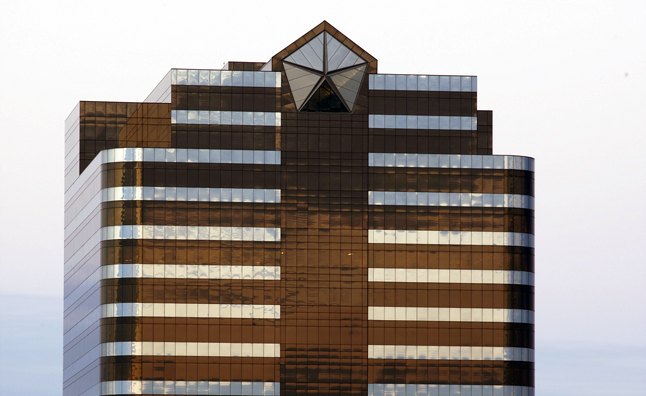
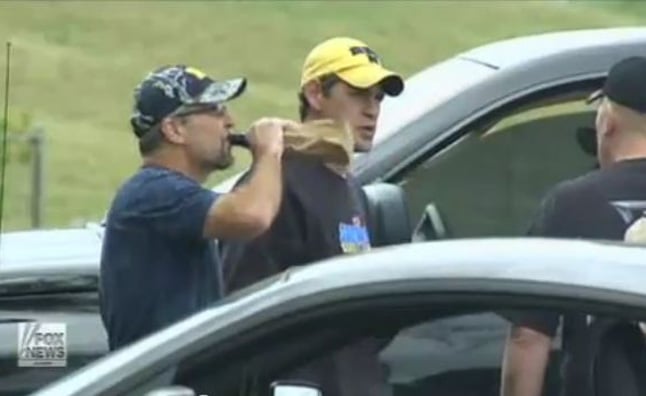
Chrysler workers that were fired two years ago for drinking on the job have been reinstated at the Jefferson North Assembly Plant against the companies wishes following a union-backed arbitration process.
Auto News
AutoGuide News Blog
The AutoGuide News Blog is your source for breaking stories from the auto industry. Delivering news immediately, the AutoGuide Blog is constantly updated with the latest information, photos and video from manufacturers, auto shows, the aftermarket and professional racing.
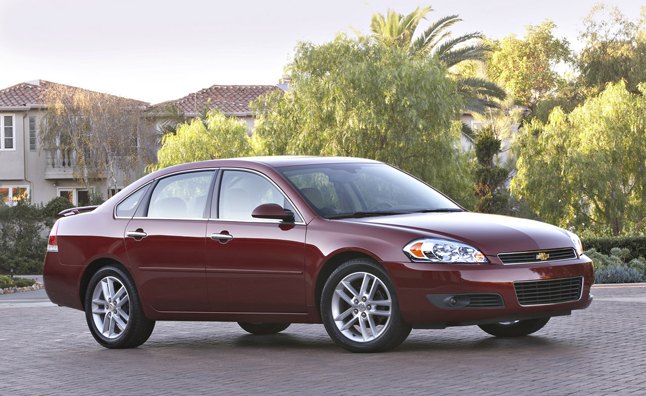
Mixing business and emotion is dangerous, as some 2,000 workers in Oshawa, Canada are learning today. The GM plant they work at, which manufactures the Chevrolet Impala and runs a flex line for the Equinox, will axe 2,000 jobs.
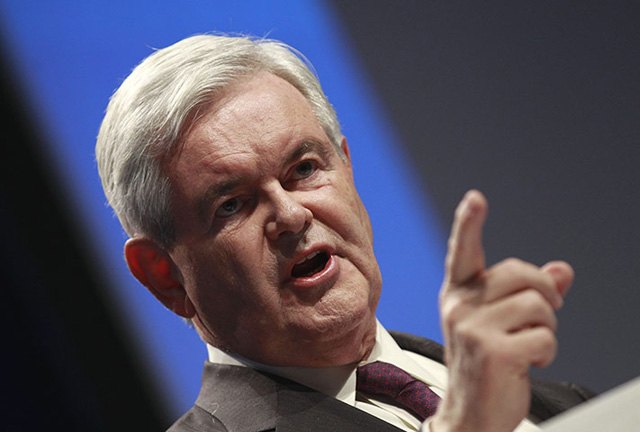
Former US House Speaker and REpublican party nominee Newt Gingrich recently touched on the auto industry at a campaign stop in Des Moines, Iowa. At his first real test as a candidate for the Republican presidential nomination, Gingrich responded to a question about jobs leaving the United States and targeted the United Auto Workers (UAW).
Gingrich praised the international automakers with nonunion plants such as BMW, Mercedes, Honda and Nissan, and then stated that “the real problem is the UAW. It’s a work-rules problem; it’s not an hourly cost problem,” he told a Rotary Club breakfast meeting. “You can’t have continuous improvement if you’re not allowed to constantly modify and improve.”
The UAW has yet to respond to Gingrich’s comments.
[Source: Automotive News]
Despite the United Auto Workers (UAW) claiming that they’re backing off trying to organize a foreign auto plant in America by year’s end, the mission to do so isn’t off the table entirely. UAW has continued to plot a plan to unionize factories owned by Daimler and Volkswagen, it just won’t happen before 2012 comes.
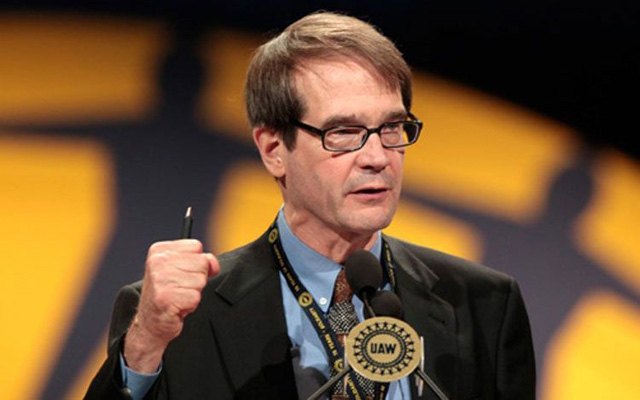
In the past, the UAW had looked at unionizing plants belonging to Hyundai, Nissan and Toyota, but now the German automakers are considered easier targets. UAW is looking to take advantage of their close relationship with IG Metall, the German union that staffs the plants for both Daimler and Volkswagen, for its organizing efforts.
Overall though, things aren’t looking positive for the UAW, with membership dropping over 75-percent in the last 30 years. Organizing plants in the South has been difficult and foreign plants are largely against joining the UAW.
[Source: Reuters]
UAW’s focus on unionizing a foreign auto plant in America by year’s end has been dropped, showing a major shift in their strategy in the union’s recruiting efforts.
We’re shifting our strategy a little bit,” UAW President Bob King said. “We are not going to announce a target at all. We are not going to create a fight.”
The announcement by president Bob King comes days after Michele Martin, UAW spokeswoman, said that the union fell short of its year-end goal of unionizing a foreign plant on American soil. Martin’s words only solidified that the UAW is backing away from its original and aggressive campaign.
Originally one of King’s biggest priorities since becoming president in July of 2010, the UAW has faced major complications in its goal of unionizing a foreign plant with a majority of their workers declining to even negotiate with the UAW. Membership for the UAW continues to drop with a 42-percent decline from seven years ago. They currently sit at 377,000 members.
[Source: Left Lane News]
UAW members are scheduled to picket outside General Motors’ Orion Township Plant today, where the Chevrolet Sonic and Buick Verano are built. Negotiations have stalled between the union and an in-house supplier owned by the Ambassador Bridge’s Moroun family.
According to Pat Sweeney, president of Orion’s UAW Local 5960, current LINC Logistics employees make $9 an hour working at the GM plant and lack health care benefits. The workers have been in the process of negotiating for months for their first contract, but last month an agreement was turned down because its proposed raises were offset by a high health care premium.
The LINC workers have unanimously voted back in June to strike if UAW leaders call for a walkout, though the union is still contemplating that decision. The union is working hard in getting both LINC and GM to be more generous, ultimately seeking fair wage and fair benefits.
GM is not involved in the negotiations but continue to monitor the situation. The Orion Township plant has always emphasized low costs since there is such little profit margins on the small cars being produced. Chevy’s Sonic is actually the only car of its size to be built in the United States; its competitors, such as Ford‘s Fiesta, turn to production in Mexico.
[Source: Detroit Free Press]
Local 551 of Chicago’s Ford Plant gave a resounding “no” to the new four-year labor contract. Local 551 represents about 6 percent of Ford’s United Auto Workers (UAW) employees and according to secretary-treasurer Scott Houldieson of Local 551, the two-tier pay scale was one of the biggest reasons the plant’s workers voted against it.
The current agreement would pay less experienced second-tier employees $19.28 per hour, 70 percent less than the first tier. According to Houldieson, that wasn’t enough to sway many second-tier voters. There was also no cost-of-living allowance and a provision for profit sharing and a signing bonus instead of wage increases for veteran employees.
The negative vote might seem like a sign of things to come, but there are still two weeks left for the agreement to be ratified. “The Chicago vote is a troubling, though hardly fatal sign,” said Harley Shaiken of the University of California-Berkeley in an interview with Reuters.
“In the 2007 Chrysler ratification vote, some early plants voted ‘no’ but the later plants voted strongly ‘yes’ when, in part, they understood their vote could prove decisive. We won’t know the result until the last vote is counted,” he said.
Tom Saybolt, a former Ford attorney who now teaches at the University of Detroit-Mercy law school agreed and pointed out that some Ford plants historically vote “no.” In fact, the current tentative agreement is more generous than what workers at GM are getting and significantly better than the deal Chrysler made.
Saybolt said that gives more leverage to the UAW to push the contract with Ford forward. If that isn’t enough to convince workers to vote “yes,” it could mean Ford losing patience and moving jobs to Mexico. If the agreement passes, 20,000 new jobs will be created, but if it fails there is a chance that 12,000 jobs will move south of the border.
The plant currently builds the Ford Explorer, Ford Taurus and Lincoln MKS.
[Source: Reuters]
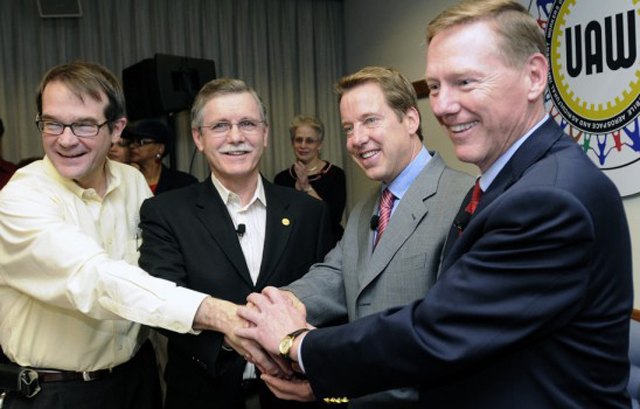
Ford is opening the floor to 2011′s contract negotiations with the United Auto Workers—which always ends in suspense.
Will the UAW walk away in anger? Will they threaten a strike? Will Ford shut down a couple more plants and idle production for months on end? Or will the ghost of Henry Ford send in the Pinkertons? It’s all up in the air, which makes for breathlessly thrilling news. Hey, automotive journalists have to keep themselves entertained somehow.
“We are reflecting upon our proud 70 year history of working together—a history of working with mutual trust and respect to effectively address difficult business challenges,” said John Fleming, vice president of Ford’s labor relations. ”We are committed to negotiating this year with the same transparency and honesty we always have upheld.”

The long-anticipated replacement for the Aveo, the Chevrolet Sonic, is set to drop in August. But a strike at the Sonic’s plant could delay this—thanks to a pay discrepancy among assembly workers.
The Sonic is being built by workers at the Orion assembly plant in Michigan, under the supervision of supplier LINC Logistics Co. Workers here make $10 per hour as opposed to the $14 to $28 they would make if they were UAW members at a GM plant. And today, workers at the Orion plant voted in overwhelming favor to authorize a strike, with 98% of workers voting yes.
Negotiations for a pay increase are set to increase soon, and with this authorization, union leaders could call for a work stoppage anytime. Despite this, GM spokespeople believe that the Sonic will still be released on time, as scheduled. Good luck, folks.
[Source: Autoblog]
UAW President Bob King is angling for seats on the Big Three’s respective Boards Of Directors, and will likely use this as a negotiating point when contracts are discussed with automakers this summer.
“I believe there should be workers’ representation on all boards,” King told The Detroit Bureau, arguing that German car companies employ the same practice, although German law legally mandates worker representation on car company boards. King also argued that the UAW should be given board seats as a “general principle”.
The Voluntary Employees Beneficiary Association (VEBA), an organization responsible for UAW retiree health care benefits, currently holds seats at GM and Chrysler’s boards, and King claimed that VEBA would ultimately decide whether Chrysler can issue its IPO later this year.
[Source: The Detroit Bureau]
General Motors will invest $2 billion across 17 plants, as the company retools existing plants to build new products and hire more workers. GM confirmed that their Toledo, Ohio plant would receive $250 million in improvements and create 250 new jobs.
CEO Dan Akerson didn’t announced which plants would be infused with new capital, but the Detroit-Hamtramck assembly plant that builds the Buick Lucerne and Cadillac DTS will almost certainly be one of them. The plant also builds the Chevrolet Volt, making it to be a prime contender for GM’s attention.
GM announced prior investments in other plants, including the Corvette’s factory in Bowling Green, Kentucky, but the latest round of capital is considered separate from these announcements. Some have speculated that GM’s reluctance to announce their plans could also be a means to gain publicity and avoid affecting upcoming negotiations with the UAW.
[Source: The Detroit News]
A group of 28 workers at General Motors’ Lordstown, Ohio plant are suing both GM and the UAW, claiming that they were wrongly classified as temporary workers, resulting in a 40 percent pay cut.
The workers were hired in 2006, fired in 2007 and then re-hired 6 months later. The workers say they were classified improperly in June of 2008. The workers are hoping to get $3-$4 million in back pay, and are suing both GM and the UAW, stating that the Union failed to look out for their interests.
[Source: MLive Photo: Cleveland.com]
General Motors is investing $131 million into their Bowling Green, Kentucky factory to help improve the legendary plant that produces the Chevrolet Corvette, but a new car won’t show up for another two model years.
Having made upgrades to the 2012 model, General Motors will focus on re-tooling the plant, while also adding 250 workers to supplement the 400 UAW employees already building America’s sports car. General Motors has remained tight-lipped on details regarding the 7th generation Corvette, but considering how good the current car is, we can’t wait to see what improvements arrive in 2014.
[Source: Kicking Tires]
UAW President Bob King said that the union may abandon their tactic of targeting one automaker during contract negotiations and negotiate with Chrysler, Ford and General Motors at the same time.
The UAW previously targeted one automaker during negotiations and used that to set an example for the others. However, King says that the relationship between the Big 3 and the UAW is better than previous years. King would like a deal to be completed before the union’s contract expires on September 14th.
King is hoping to extract concessions from the Big 3 after workers gave up thousands of dollars worth of compensation during the automakers lean periods. The resurgence of the Big 3 has spurred some union members to demand King take a more aggressive tone with the automakers. King previously criticized Ford for offering CEO Alan Mulally a $26.5 million compensation package, calling it “morally wrong”.
[Source: Detroit Free Press]
The Big Three U.S. automakers are poised to add 36,000 new manufacturing jobs by 2015 according to economist Sean McAlinden of the Center for Automotive Research. Speaking after a lecture at Wayne State University, McAlinden told reports that the current workforce employed by the GM, Ford and Chrysler is currently working at near maximum capacity and that the added Tier 2 hourly workers will be needed.
It’s not all good news, however, with the Tier 2 status being the lowest wage payable to new hourly workers. While a positive in the short term for the automakers, it also looks to spark a larger debate over compensation, with the UAW eager to win back concessions made leading up to and exiting the GM and Chrysler bankruptcies.
Current agreements between the Big Three and the UAW allow up to 25 percent of workers to be Tier 2, and even raising that number to 20 percent from the current level would see average salaries for GM drop from a current $58 per hour wage to $48 per hour, significantly driving up profits.
That 25 percent only lasts until 2015, however, hence the expected surge in new hires before that date. With the 25 percent rule came into effect as the Big Three struggled during the recession, a post-downturn auto industry and high profits will have the UAW on the warpath to win back compensation for its members. Big union-manufacturer battles are brewing and according to McAlinden, look for Ford to be the first target.
[Source: Automotive News]
General Motors will recall 2,000 laid off workers by September according to a Detroit News report, allowing the company to start hiring new workers for its American plants.
While G.M. representatives would not confirm any timeline, Joe Ashton, UAW VP in charge of GM, confirmed that the workers would be back, stating “We will have full employment in September for the first time in a long time,”
Many of the workers are situated in Southeast Michigan, an area devastated by the decline of the auto industry. GM is adding a third shift of 750 employees to its Flint truck plant, a second shift of 600 workers to its Lansing plant to build the Cadillac ATS and recalling 1,550 workers to its Lake Orion small car plant.
New workers will have to contend with a wage of $14-$16 an hour, roughly half of what recalled and current employees will make. The two-tier wage system is a point of contention among union members, but the contract under which is was implemented is scheduled to expire this year and will be re-negotiated by the union and the Big Three this summer.
[Source: Detroit News]
UAW chief Bob King slammed Ford CEO Alan Mulally’s $56.5 million stock package, claiming that “I don’t think any human being in the world deserves that much money.”
While certain to raise the ire of Ayn Rand fanatics everywhere, King is amping up the rhetoric ahead of the United Auto Workers “bargaining conference” where strategies will be outlined for the upcoming labor negotiations with Ford and other automakers. King’s rhetoric was particularly inflammatory and reflected the unions hard left leanings, with King quoted as saying “…It seems like one individual is getting all the gains instead of gains being shared by everybody.”
Ford’s stock was up 68 percent in 2009, with share prices quadrupling in 2008. Ford spokesman John Stoll told Bloomberg that Mulally’s compensation “…reflects Ford’s goal of retaining a world-class CEO.”
[Source: Bloomberg]
With Ford awarding more than $130 million in stock to its top executives, the UAW official in charge of Ford is optimistic that the company will also compensate union members who build the vehicles that Ford sells.
“I am going to look at that on the up side and say that I know that they compensated them very well at the top, so I feel that they are going to compensate us at the bottom very well,” said Jimmy Settles, in an interview with the Detroit News. The comments come as Settles, a UAW Vice-President, prepares to negotiate with the automaker, after it posted a $6.6 billion profit in 2010.
Ford handed out profit sharing checks to UAW members in February, worth an estimated $5,000 each on average. The UAW is holding a conference next month related to collective bargaining issues which settles described as a “barometer” to gauge union opinion.
[Source: Detroit News]
A Chrysler worker, claiming to have been fired after ending a relationship with the son of a United Auto Workers official, is now suing the UAW for sexual harassment, gender discrimination and retaliation. The lawsuit was filed in U.S. District Court in Detroit.
Janet Burney began dating Pat Byers, son of John Byers, who was head of the UAW-Chrysler National Training Center. Shortly after, Burney was promoted and given a substantial raise. Burney claims that after the relationship ended, her position was terminated.
“Pat Byers had told the plaintiff repeatedly that as long as she was with him her job in special assignment was secure,” Burney’s lawyer Richard A. Meier said in the lawsuit. “[Burney] was terminated because she is a female who refused to continue a sexual relationship with Pat Byers.
[Source: Detroit News]
Even though Toyota saw its dealerships and other facilities picketed by UAW members in 2010, Honda is taking a tough stance on any interference by the United Auto Workers, with John Mendel, Honda‘s executive vice-president, dismissing them in a speech made on Tuesday.
“The union announced that they’re going to target the operations of international automakers this year,” said Mendel, while speaking to the American International Automobile Dealers Association. “The issue of union representation is one for our associates to decide, not us. Having said that, we do not believe that an outside party will improve upon [our] outstanding track record of success … over the past 30-plus years.”
Mendel stressed that the prime directive for dealers was to “remain focused on your relationship with your customers and associates.
[Source: Automotive News], [Photo Credit: Al.com]
Mere months after workers at Chrysler’s Jefferson North factory were caught drinking and smoking marijuana on their lunch breaks, three employees were arrested by law enforcement agencies after Chrysler tipped off police regarding workers who continued to abuse substances while on the job.
The workers were arrested on January 24th, but have yet to be formally charged, according to a spokesman for the Michigan State Police. Chrysler confirmed that they were co-operating with police on the matter. The company released a statement to the media, remarking “In this instance, Chrysler Group cooperated with the County of Macomb Enforcement Team in the arrest of suspected employees at Jefferson North who were allegedly in violation of state law.”
A local Fox affiliate caught workers on video engaging in similar behavior last fall. The Jefferson North plant builds the Jeep Grand Cherokee and Dodge Durango, two vehicles that have won widespread acclaim from consumers and the media.
[Source: The Detroit News]
The United Auto Workers continued its campaign of irrelevancy as its President, Bob King, launched a series of veiled threats at foreign automakers with American plants (such as the Honda plant seen above), while simultaneously stating that the very survival of the UAW is at stake – and the organization of a foreign automaker’s plant is the key to the UAW’s continued existence.
“If we don’t organize these transnationals, I don’t think there’s a long term future for the UAW — I really don’t,” said King in a speech to members of a political conference held in Washington, D.C.
Despite the fact that foreign automakers offer equivalent or better wages than UAW plants, King is aggressively targeting them, with King planning to pick a target within 90 days. Other actions include targeting dealers of the chosen automaker for protests, and asking automakers to comply with “fair bargaining” principles, despite that fact that it runs counter to the complete absence of collective bargaining in foreign auto plants. “They don’t fear us and they think they can’t get away with it,” King said, in an almost naked display of insecurity regarding his own relevance.
King was at least cognizant enough to acknowledge that the UAW was a spent force, stating “Here’s the terrible position we’re in autos. Because we’ve fallen so far in the percent of workers represented by the UAW in autos” the union can’t demand big increases because of non union competitors. “So if we go in, we dramatically raise fixed costs for Ford, General Motors or Chrysler, we’re shooting ourselves in the foot. … We don’t want to disadvantage the (Detroit 3) companies.” King ended his speech by telling UAW members that Barack Obama’s re-election in 2012 would be beneficial for the UAW, due to his pro-union stance.
[Source: The Detroit News]
General Motors will buy $2.1 billion worth of preferred stock as part of a move to pay off its $49.5 billion in federal bailout loans. GM will also launch a series of measures to reduce its debt by $11 billion.
GM will make contributions to the UAW pension fund, to the tune of $6 billion, and secure a $5 billion line of credit from a series of banks, which should help reduce its total debt obligations by a total of $11 billion.
“These actions will bring down our leverage by $11 billion by reducing debt and improving our pension funding position,” GM CFO Chris Liddell said in a statement.
[Source: Automotive News]
It’s a common truism that unionized auto workers have the most secure jobs in the world. But 13 Chrysler line workers caught drinking and smoking marijuana during their lunch break better start looking for new jobs.
Chrysler has announced that the dirty dozen (and one other poor shmuck) have been fired for their actions. Their behavior was a massive embarrassment for the company, since it was documented and broadcast by Fox News, a network that’s not exactly an ally of the UAW or government-owned Chrysler. To add insult to injury, the workers were employed at the same plant that President Obama visited just weeks ago, where he praised the workers, and the new Jeep Grand Cherokee that’s built there.
Chrysler even issued a statement, which you can see below the jump
[Source: Chrysler]