Auto News
AutoGuide News Blog
The AutoGuide News Blog is your source for breaking stories from the auto industry. Delivering news immediately, the AutoGuide Blog is constantly updated with the latest information, photos and video from manufacturers, auto shows, the aftermarket and professional racing.

16/02/2012 | By: Sami Haj-Assaad

Listen kids, if you thought it was tough to get your driver’s license in America, wait until you see China’s test. Sure it’s filled with questions on road laws, dangerous chemicals and safety concerns, but some of these questions are ridiculous.

Traditional true or false sections are replaced with right or wrong statements and some of them make sense, for example:

“When a motorized vehicle breaks down on the expressway, the persons on board should swiftly move to the front of the vehicle for hiding.”

Answer: Wrong.

After looking through the 120 page document of test questions and answers, there are a few that are a bit more puzzling.

One question that shows the strict nature of the driving laws in China states:

“When a motorized vehicle is on the road, the people inside the vehicle are not allowed to stick their heads out of the window but may stretch their hands out of the window.”

Answer: Wrong.

So drivers and passengers may never get the chance to feel the wind blowing through their hands as they drive on a warm summers day… But our heads? Sure!

The sign in the picture means _______.


A. Danger

B. No passing for all motor vehicles

C. No tailgating

D. Accident-prone section

Answer: D

Thanks for the heads up…

[Source: The Globe and Mail]

16/02/2012 | By: Danny Choy

jac_4r3_1.jpg

Two weeks ago, we saw that China’s Jianghuai Automobile Co. (JAC) recreated its own version of Ford’s F-150 pickup truck to an amusing level of detail. According to The Detroit News, JAC now plans to unveil its 4R3 pickup at the upcoming Beijing Auto Show.

Copying Ford design cues to even sport the F-150 grill and big blue oval badge, the JAC successfully mimicked the pickup’s brawny appearance to a tee. However, the JAC 4R3 receives its power from a rather un-Ford-like, gutless, 2.8-liter diesel engine with just a little over 100-hp and 177 lb-ft of torque.

Aware of its clone, Ford has yet to decide the best way to approach JAC on the matter.

“We’re aware of it and we’re investigating. We’re just trying to get an idea of what’s going on with the vehicle and haven’t decided what our next steps might be,” Ford spokesman Mike Levine told the Detroit News.

Chinese knockoffs are anything but rare and it’s really not surprising to see something like this from JAC. That said, Ford may actually struggle to sue the state-owned automaker because doing so would likely require filing against the Chinese government, which might not ever hear the case.

Despite the obvious design ripoff, it might be easier and cheaper for Ford to let the wimpy clone live in the true truck’s shadow, rather than taking legal action.

GALLERY: JAC 4R3

jac_4r3_1.jpgjac_4r3_2.jpgjac_4r3_3.jpgjac_4r3_4.jpg

[Source: Detroit News]

09/02/2012 | By: Danny Choy

According to a statement by the China Association of Automobile Manufacturers (CAAM), China’s monthly sales of passenger-vehicles suffered its steepest decline in more than seven years due to a Lunar New Year holiday season hiatus that deprived dealers of a week’s worth of sales. Figures indicated that sales fell to 1.16 million units in January, a 24 percent decrease from the year before. According to five analysts from Bloomberg News, sales were projected to drop 18 percent.

Great Wall Securities Co. analyst Ran Fei said, “Even though the actual holidays were five working days, some dealerships took the opportunity to close their stores for a longer time. The numbers are disappointing.” Compounding the auto sales slump in the Chinese market, the Chinese government also estimated that holiday sales at the nation’s main retailers and restaurants rose at their slowest pace since the 2009 financial crisis.

Are these signs an indication that the world’s largest and fastest growing automotive market is showing economic resistance? Despite these statistics, Ran Fei insists that “Car demand is stable. There’s no indication of any changes on that front.” China’s Passenger Car Association also believes that the Chinese economy is fundamentally sound and interprets the auto sales number as a mere holiday season distortion. The Passenger Car Association expects a 30 percent rise in sales for February.

Huatai Securities Co. analyst Chen Liang adds, “Demand is still there and consumers in the smaller, less developed cities will still have a growing need for cars. These numbers don’t change my outlook for the year.”

In January, GM reported an 8 percent decline in China sales, its first Chinese sales decline in six months. Chevrolet sales suffered a 20 percent hit to 54,399 units. According to Ford, its China sales fell a staggering 42 percent last month. Bucking the trend, Luxury German brands BMW and Audi both posted higher sales, enjoying a 30 percent and 23 percent gain respectively.

IHS Automotive Shanghai analyst Namrita Chow provided this explanation, “Prior to the Chinese New Year, Chinese consumers who are looking to enhance their prestige and status symbol have chosen high-end luxury brands.”

[Source: Bloomberg]

19/01/2012 | By: Luke Vandezande

saab_logo.jpg

Just when it seemed Saab would be gone from news headlines for good, Youngman swooped in again to make a bid.

Apparently the company hasn’t given up on getting Saab back up and running. According to Dagens Industri, a Swedish business news organization, the Chinese firm is submitting a £430 million offer, or about $560 million.

They are choosing to make that offer despite GM’s previous sabotage attempts which were meant to keep the company out of Chinese hands. A miniature war was waged last year between Youngman and GM when the American giant decided such a sale would unfairly divulge technology being used in the 9-4X.

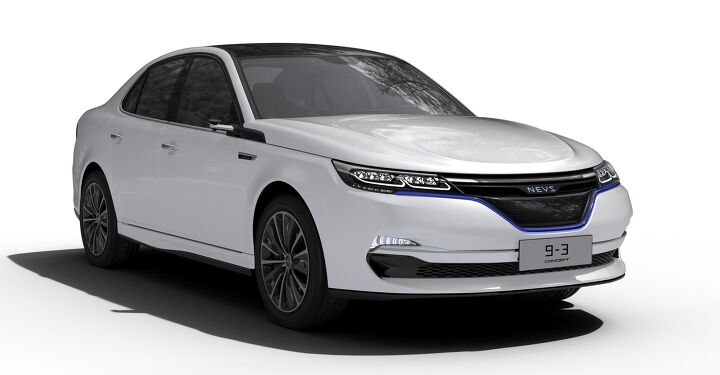
Youngman seems unfazed, however, and is continuing their pursuit which will include an additional $520 million being invested. If they actually manage to take the company, they plan to resume production of the 9-3 in April or May.

[Source: Autocar]

30/12/2011 | By: Luke Vandezande

p90057392highres.jpg

Things aren’t just “made in China” anymore, in fact the country’s surging economy is significantly supporting industries like the luxury car market. BMW, Audi, Mercedes-Benz and more are all aiming their crosshairs at the Chinese economy, hoping it can be the saving angel capable of salvaging growth.

That’s still likely to be the case, though not with the breakneck speed we saw a year ago when light vehicle sales grew 33 percent. China is taking steps to shush their screaming economy by restricting residential property purchases in an effort to avoid a housing bubble. Despite that, IHS Automotive and LMC expect car sales to grow between eight and 10 percent next year.

That growth will be slower thanks to restrictions and disappearing subsidies. The Chinese government removed incentives after 2010 meant to encourage new car buyers into the market while Beijing, this year, imposed a strict quota on new car purchases to cut down on traffic congestion and pollution.

Despite that impediment, Chinese car sales are still expected to grow, which is good news for luxury car makers. Demand for German luxury cars is actually eclipsing the European market, which traditionally consumes the most. With money looking tight across the globe, a 10 percent growth margin is sure to look good for any automaker.

[Source: Automotive News]

30/12/2011 | By: Stephen Elmer

China is the largest automobile market in the world, but as of right now it is all of the import brands who are primarily profitting from this. The Chinese government is now saying it will outline a plan to make sure that domestic brands such as Geely, Great Wall and BYD get their fair share of the market as well.

The problem in China is that the domestic auto manufacturers have yet to produce a product which stands up to the same quality and luxury of all the established import brands such as Volkswagen or Toyota. In the light car market the domestics have some power over the imports, but when it comes to luxury cars, SUV’s or anything other than tiny city cars the chinese automakers can not compete with German giants like Audi and Mercedes-Benz.

In an effort to encourage new energy vehicles, the chinese government says it will curb the amount of investment in gasoline powered cars and auto plants and encourage foreign investment into electric vehicles.

The current shift in thinking is aimed at making Chinese automakers more competitive on a global scale and driving more money back into the countries economy. The new regulations will probably include higher tariffs on imported goods and fewer tax breaks for import brand companies. The new rules will come into effect on January, 30th 2012.

[Source: Yahoo News]

06/12/2011 | By: Derek Kreindler

Geely will make their first foray into the notoriously tough British market in 2012, hoping to emulate the success of Korean brands like Hyundai.

While Geely already helps produce the iconic London taxis, the company will face an uphill battle regarding the vehicle’s perceived quality.  Their first UK offering, the EC7 compact car, will cost 10,000 GBP (roughly $15,581 USD) and feature a five-year, 100,000 mile warranty.

Geely is looking to recruit 30 to 40 dealers and sell about 1,000 cars in 2013, with a new model added for the next 4 to 5 years. Geely will be based out of Coventry, where the office of Manganese Bronze Holdings’ London Taxi Company (its partner in London Taxi production) resides, but Geely will remain separate from its subsidiary Volvo Cars.

[Source: Automotive News]

05/12/2011 | By: Luke Vandezande

1400503.jpg

Saab’s sob story saga might be coming to an end, though the information surrounding their pending acquisition is murky at best.

Rumors swirled quickly around the media yesterday that the Bank of China, fourth-largest by market value had planned to acquire just under 50 percent of the company. Those reports are now being corrected— it’s a bank in China, but not the Bank of China. Regardless, this investment could be the savior Saab prayed for after GM flatly rejected their previous partnership with Zhejiang Youngman Lotus Automobile Co. and Pang Da Automobile Trade Co.

Pang Da operates dealerships in China, while Youngman manufactures Chinese vehicles under the Lotus brand.

According to GM, that partnership would jeopardize their own interests in China because they supply both parts and the 9-4X crossover, which would then be unfairly accessible to the Chinese companies.

Saab hopes the new deal will keep GM satisfied while allowing them to finally be rid of their debt, which includes unpaid salaries and bills.

“The discussions include a short term solution to enable Saab Automobile to pay November wages and continue reorganization. The outcome of the discussions is still uncertain,” Saab said to Automotive News.

Saab parent company Swedish Automobile originally hoped for Pang Da and Youngman to take a combined 53.9 percent share of Swedish Automobile, but nothing in Saab. The two companies pushed instead for full ownership of Saab.

Gallery: Saab 9-4X

1400501.jpg1400502.jpg1400505.jpg1400508.jpg1400514.jpg1400516.jpg

[Source: Automotive News]

29/11/2011 | By: Huw Evans

Several years ago the prospect of seeing Chery cars on our shores appeared imminent, thanks to a deal signed between the Chinese automaker and entrepreneur Malcolm Bricklin.

However the deal fell apart and further plans to market cars in the US, including fledgling deals with Chrysler during its dark Cerberus period have come to nought.

Now, Chery is eying the European market, attempting to market a compact sedan called the Qoros that’s the result of a joint venture with Israel Corp (the Middle Eastern nation’s largest holding company). The Qoros is said to be more upmarket than anything Chery currently produces at home  and both companies have ambitious plans, setting initial production targets of 150,000 units a year, with a new factory being constructed near Shanghai to produce the car.

In order to be sold in Europe, the Qoros will have to meet, among other things, NCAP safety standards; a goal has been set of achieving five-star crash status and former Mini design direct Gert Hildebrand has signed up to work on the project, while Austrian company Magna-Steyr is reported to be actively involved.

Whether  such ambitions plans will come to fruition remains to be seen, especially in lieu of Chery’s previous  failed attempts to infiltrate Western markets and past legal issues, ranging from trademark infringements to shady contract dealings. Nonetheless, if the Qoros does succeed, it just  might mark the start of a new era in the automotive business and renewed low price competition in the European marketplace.

[Source: Left Lane News]

28/11/2011 | By: Jason Siu

201003230003_Subaru_EN_20100323_100859.jpg

The automotive market in China right now is an interesting one, with obviously a huge consumer base to pick and choose from. It’s common knowledge that Chinese manufacturers still aren’t up to par with American, Japanese or European counterparts, and some of the major players continue to look at forming partnerships with established brands.

Chinese automaker Chery, has one of the best-selling economy cars in China, the Chery QQ, has been trying to form a joint venture with Subaru for quite some time now. But China’s National Development and Reform Commission opposed the joint venture due to the fact that Subaru is owned by Toyota and Toyota already has two joint ventures in China (the maximum allowed). It’s worth arguing though that Toyota only holds 16.5-percent of Subaru’s parent group, Fuji Heavy Industries, shares.

So in order for the joint venture to go through, Subaru would have to let Chery take the reins in China, meaning that every Subaru would be sold with a Chery badge and through a Chery-run dealer. Whether or not Subaru will agree to this has remains to be seen.

This isn’t the first time Chery has tried to team up with a foreign automaker, having inked failed deals in the past with Chrysler and Fiat.