

2027 Nissan Z Performance Review

The modern sports car segment is shrinking fast, and many brands are pivoting toward sterile, futuristic EVs. Yet Nissan continues to double down on a classic formula that has worked for more than half a century. Dating back to the original 1969 Datsun 240Z (which arrived in the States for 1970 at just $3,500 to undercut pricey European rivals from Jaguar, Porsche, and MG) the Z has always been about delivering accessible, six-cylinder, rear-wheel-drive thrills.
For 2027, the seventh-generation Nissan Z receives a heritage-infused refresh alongside thoughtful chassis tweaks. We spent a week behind the wheel of the 2027 Nissan Z Performance equipped with the nine-speed automatic transmission to see how well this retro-modern coupe balances its iconic past with everyday street manners.
Quick Take
The 2027 Nissan Z Performance builds on more than 50 years of sports car heritage with a sharper, S30-inspired front fascia, a stunning new Shinkai Green Pearl Metallic paint option, and meaningful mechanical upgrades. Powered by a punchy 400-horsepower twin-turbo V6, it remains an engaging and nostalgic rear-wheel-drive coupe. While the nine-speed automatic transmission can feel a bit jerky at lower city speeds and cabin storage is tight, its combination of classic design cues, genuine performance hardware, and daily usability makes it a standout among modern sports cars.
Exterior Styling: Half a Century of Heritage
Nissan didn't need to reinvent the Z's silhouette for 2027, preserving its signature long hood, low roofline, and sweeping body lines. Instead, designers focused on a meaningful front-end refresh that leans even harder into Z history.
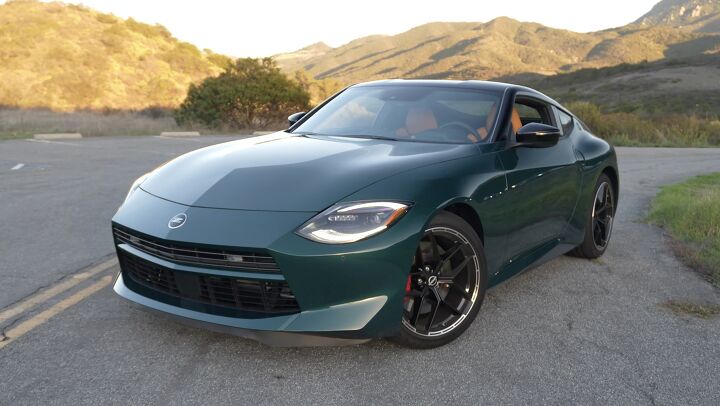
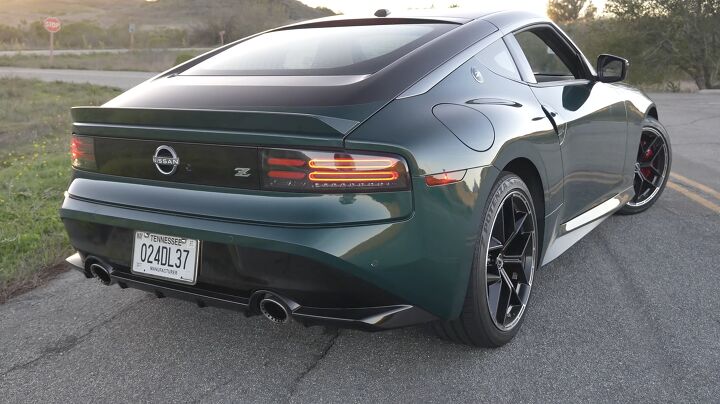
The biggest visual change is a redesigned front bumper and grille bisected by a body-colored horizontal bar—a direct homage to the original S30-generation 240Z. Up front, the traditional Nissan roundel has also been swapped out for a classic "Z" emblem, while the rear continues to wear sleek taillights inspired by the Z32 300ZX. Rather than chasing overly futuristic trends, the Z strikes a clean, simple balance between retro cues and modern proportions.
Our test vehicle was finished in Shinkai Green Pearl Metallic, a newly added paint option inspired by the original S30 Z's green hue—and one that drew compliments from passersby throughout our week of testing. Stepping up to the Performance grade also brings functional hardware rather than mere cosmetic fluff, including larger 19-inch forged RAYS alloy wheels (newly redesigned with black spokes and machined rims for 2027), Bridgestone Potenza S007 summer performance tires, and upgraded brakes featuring four-piston front and two-piston rear calipers.
Interior Comfort & Technology
Slide into the cockpit, and you are greeted by a driver-focused layout that blends modern screens with nostalgic analog touches. On every startup, the digital display greets you with a graphic showcasing each generation of the Z—from the 240Z through the 280Z, 300ZX, 350Z, and 370Z—before settling into a crisp 12.3-inch digital instrument cluster.
Key Interior Highlights:
- 12.3-inch digital instrument cluster with multi-generation Z startup animation
- 9.0-inch central infotainment touchscreen
- Heritage triple pod gauges atop the dash (turbo boost, turbo speed, and battery voltage)
- Heated suede and leather seats for both driver and passenger
- Bose premium audio system
Those three dashboard pod gauges are a direct nod to classic Z interiors and add genuine character to the cabin. For 2027, Nissan also introduced a new tan leather upholstery option on the Performance grade to pair with the Shinkai Green exterior.
As expected in a dedicated two-seat sports coupe, small-item storage inside the cabin is minimal. However, the Z proves surprisingly practical for running errands, offering an ample rear cargo area and useful extra storage space tucked right behind the driver and passenger seats.
Powertrain, Driving Impressions & Fuel Economy
Under the long hood sits the 3.0-liter twin-turbocharged VR30DDTT V6—an engine family familiar from the Infiniti Q50 and Q60 Red Sport—making 400 horsepower and 350 lb-ft of torque. Popping the hood reveals enthusiast-friendly touches you rarely see on modern cars, including a thick strut tower brace and a physical engine oil dipstick. For 2027, Nissan also gave the Z Performance larger-diameter shock absorbers to sharpen ride stability and damping, alongside a revised fuel tank design to ensure consistent fuel delivery during sustained, high-G cornering.
Because this is the Performance trim, power is sent to the rear wheels through a mechanical limited-slip differential (LSD), which effectively distributes torque between the rear tires when traction breaks loose.
While most enthusiasts—ourselves included—naturally gravitate toward the available six-speed manual transmission, our tester came equipped with the nine-speed automatic. On paper, it brings plenty of performance features, including steering-wheel paddle shifters, automatic rev-matching on downshifts, and launch control.
Out on the road, the twin-turbo V6 delivers plenty of low-end torque and pulls hard whenever you get into the throttle. However, the nine-speed automatic leaves room for improvement in everyday driving. At lower speeds—particularly when accelerating from a stop or transitioning from braking back onto the throttle—shifts can feel noticeably jerky. While crisp shifts are expected in a performance coupe, smoother low-speed calibration would go a long way toward improving daily drivability.
On the fuel economy front, the ratings are 19 MPG city / 28 MPG highway and 22 MPG combined for the 9-speed automatic. The 6-speed manual consumes more fuel with a 18/24/20 mpg rating. Of note, the car recommends 91-octane premium fuel. (For more on the recommended vs required debate, check out our podcast episode here).

Pricing
For 2027, the Nissan Z lineup starts at $44,480 for the base Sport grade, while our 2027 Nissan Z Performance carries a starting MSRP of $54,480 (plus a $1,325 destination and handling fee)—and notably, Nissan charges the exact same price whether you choose the six-speed manual or the nine-speed automatic. (If you want maximum track hardware, the 420-hp Z NISMO starts at $67,260 and finally adds a six-speed manual option for 2027.)

xThe Verdict
After spending a week with the 2027 Nissan Z Performance, what makes this car truly special is its commitment to heritage. More than fifty years after the original 240Z debuted, Nissan has resisted the urge to reinvent the wheel, sticking to the exact rear-wheel-drive, six-cylinder recipe that made the Z an icon in the first place. While the nine-speed automatic could use smoother low-speed tuning—making the no-cost six-speed manual an even more tempting choice—the refreshed styling, punchy 400-hp V6, and thoughtful performance upgrades make the 2027 Z Performance an absolute blast to drive.

Pros | Cons |
|---|---|
Heritage-Rich Refresh: S30-inspired grille bar, retro Z badging, and Shinkai Green paint look fantastic. | Jerky Low-Speed Shifts: The 9-speed automatic isn't always smooth in stop-and-go city driving. |
Punchy Twin-Turbo V6: 400 hp and 350 lb-ft of torque deliver strong, accessible acceleration. | Limited Cabin Storage: Small-item storage inside the two-seat cockpit is tight. |
Real Performance Hardware: Performance trim adds forged 19-inch RAYS wheels, larger brakes, upgraded shocks, and a mechanical LSD. | Premium Fuel Recommended: Twin-turbo V6 asks for 91-octane gas at the pump. |
Enthusiast Touches: Features a physical oil dipstick, factory strut brace, and classic triple dash gauges. |

SPECIFICAITONS | |
|---|---|
Engine/Motor | 3.0-liter twin-turbo V6 |
Output: | 400 hp and 350 lb-ft |
Drivetrain: | RWD |
Transmission: | 9-Speed AT |
Fuel Economy (mpg): | 19 city, 28 highway, 22 combined |
Starting Price | $55,805 (incl dest) |

Makena is an automotive content creator and enthusiast with a passion for all things automotive, with a focus on fine-tuning BMWs, classic cars, and the stories behind them. Her interest in cars has grown from a personal passion into a career in automotive marketing and media, where she combines photography, video, writing, and storytelling to share the people, culture, and history that make the automotive world unique. With a particular appreciation for classic and enthusiast-driven cars, Makena brings a fresh, accessible perspective to automotive journalism while continuing to explore everything from iconic classics to the latest vehicles shaping the industry.
More by Makena Sartore


Comments
Join the conversation